
Cognitive Heuristic: Ticking Integrity
A composite heuristic fusing Clockspeed with Skin and Soul

Guide to Sections
Setting the Stage
Clockspeed: Understanding the Rhythm
Skin in the Game: Commitment and Consequence
Ticking Integrity: Fusing Clockspeed with Skin and Soul
Wrapping Up
Setting the Stage
Heuristics are like mental shortcuts or simple rules we use to make quick decisions without overthinking everything. They help us spot patterns or rely on past experience so we can decide fast, like thinking “if it feels familiar, it’s probably safe” or just going with what seems right. While they usually work well, sometimes they can lead to mistakes, especially in tricky situations.
Over the past few months, I’ve shared a bunch of standalone cognitive heuristics on this platform, like the Prisoner’s Dilemma, Idiot Index, Minority Rule, and Measuring Velocity. Today, I’m excited to share something a bit different—a composite heuristic that combines two new ideas: clockspeed and soul in the game. What makes this approach cool is how it blends these concepts to give us a deeper, clearer understanding of the topic. Instead of seeing things from just one angle, this mix helps us get a richer, bigger picture.
Clockspeed: Understanding the Rhythm
Think of clockspeed as the pace of change in an industry. Instead of telling you the time, it tells you how quickly companies are creating new products or improving the way they work.
There are two main types:
Product clockspeed: how fast new products come out and how long they actually stay relevant.
Process clockspeed: how quickly a company can make and deliver what it sells.
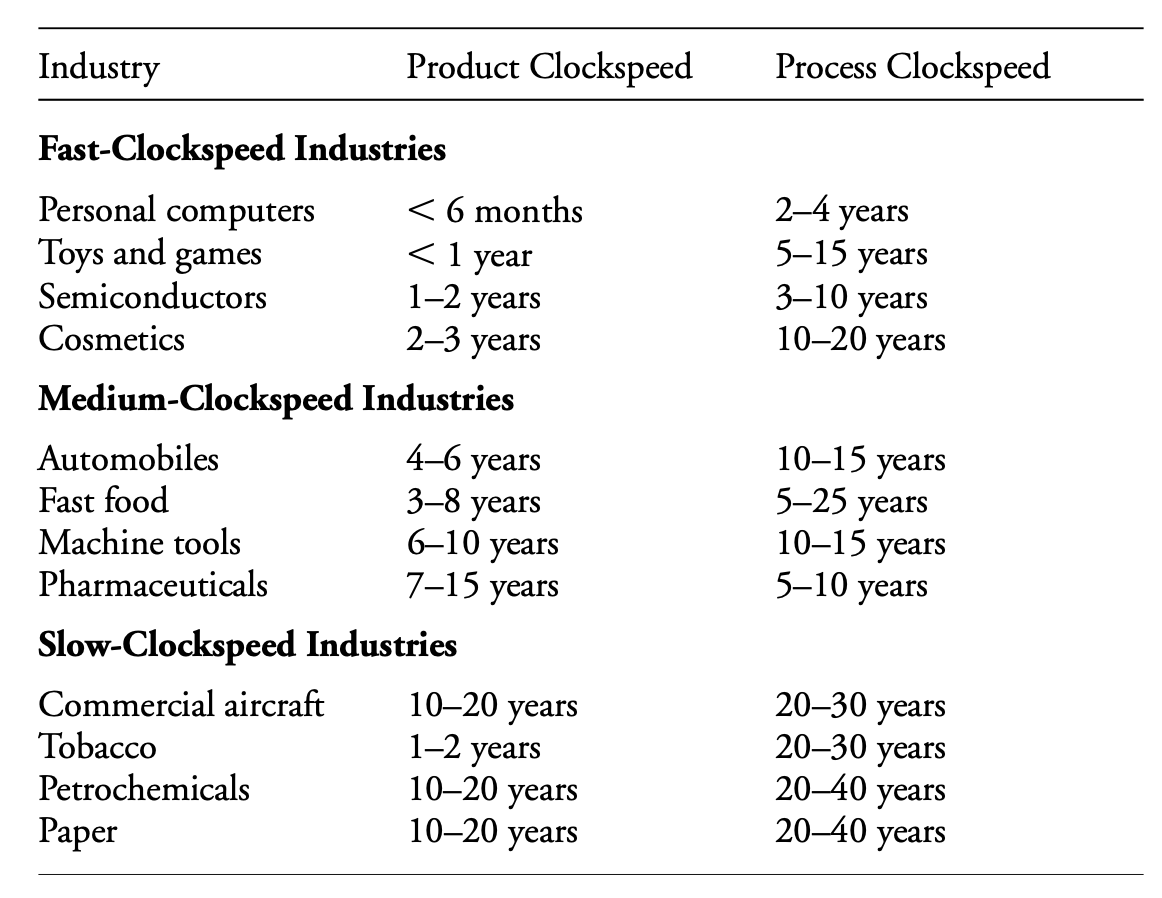
Clockspeed: Winning Industry Control in the Age of Temporary Advantage
Take the pharmaceutical industry. It’s often labeled a “medium-clockspeed industry”. That means a new drug typically takes 7–15 years from development to launch, while improving processes (like manufacturing methods) can take around 5–10 years. Compare that to personal computers, where new models show up every 6 months — Pharma is slower, but still fast enough to really matter.
So why does clockspeed matter?
Keep reading with a 7-day free trial
Subscribe to Antifragile Thinking to keep reading this post and get 7 days of free access to the full post archives.